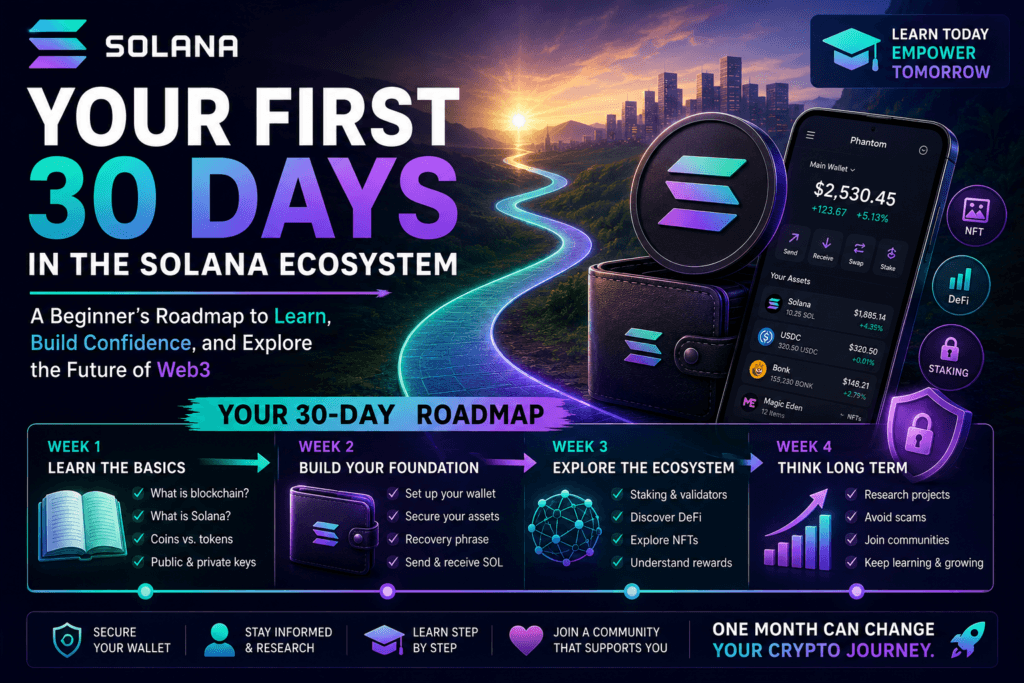
Your First 30 Days in the Solana Ecosystem: A Beginner’s Roadmap
Starting your cryptocurrency journey can feel overwhelming. New terms, unfamiliar technology, wallets, tokens, staking, NFTs, and decentralized finance (DeFi) often make blockchain seem far more complicated than it really is. Many beginners try to learn everything at once, only to become frustrated and give up before they truly understand how the ecosystem works.
The good news is that you don’t need to become an expert overnight. Like learning any new skill, understanding blockchain happens one step at a time. By following a structured learning path, you’ll build confidence while avoiding many of the common mistakes new crypto users make.
This 30-day roadmap is designed to help you learn the Solana ecosystem at a comfortable pace. Instead of focusing on trading or speculation, we’ll concentrate on education, security, and understanding how the technology works. By the end of these 30 days, you’ll have a solid foundation for exploring Solana responsibly and confidently.
Week 1: Learn the Fundamentals
The first week is all about understanding the basics.
Don’t worry about buying cryptocurrency or connecting wallets yet.
Instead, focus on learning how blockchain technology works.
By understanding the “why” behind the technology, everything else becomes much easier.
During your first week, learn:
- What blockchain technology is
- What Solana is
- How transactions work
- The difference between coins and tokens
- Public keys and private keys
- Why decentralization matters
Think of this week as learning the language before trying to speak it.
If you’re completely new to cryptocurrency, our Solana Beginner Guide provides the perfect starting point.
Understand the Solana Ecosystem
Once you understand the blockchain itself, begin exploring the broader Solana ecosystem.
You’ll discover that Solana isn’t simply one cryptocurrency.
Instead, it’s an entire network of:
- Wallets
- Validators
- Developers
- NFT marketplaces
- DeFi applications
- Gaming platforms
- Communities
- Educational resources
Seeing how these pieces connect helps you understand why Solana has become one of the fastest-growing blockchain ecosystems.
Our Solana Ecosystem Explained for Beginners article introduces each of these components in simple language.
Week 2: Build Your Foundation
Now that you understand the basics, it’s time to create your first wallet.
A wallet is much more than a place to store cryptocurrency.
It’s your gateway to everything you’ll do on the Solana blockchain.
During Week 2, focus on:
- Creating a wallet
- Understanding your recovery phrase
- Learning wallet security
- Sending and receiving small test transactions
- Viewing your wallet address
Take your time.
There’s no need to rush.
Our Phantom Wallet Setup Guide for Beginners walks you through each step of creating your first wallet safely.
Make Security Your Priority
One of the most important habits you can develop is protecting your wallet.
Before exploring DeFi, NFTs, or staking, understand how to protect yourself from common scams.
Spend time learning:
- How recovery phrases work
- How to identify phishing attempts
- Why fake websites exist
- How wallet permissions work
- Safe browsing habits
Developing these habits early can prevent costly mistakes later.
Our Solana Wallet Security Checklist provides practical steps every beginner should follow.
Learn What Your Wallet Can Do
Modern Solana wallets offer far more than simple storage.
As you become comfortable using your wallet, begin exploring features like:
- Viewing NFTs
- Tracking transactions
- Connecting to decentralized applications
- Staking SOL
- Managing SPL tokens
Understanding these features now will make future learning much easier.
Our Top Solana Wallet Features Every Beginner Should Know guide explains each feature in detail.
Week 3: Explore the Solana Ecosystem
By Week 3, you’ll have a basic understanding of blockchain and wallet security.
Now it’s time to begin exploring the technologies that make Solana unique.
Remember:
You don’t need to participate in everything.
Your goal is simply to understand how these technologies work.
Start learning about:
- Staking
- Validators
- NFTs
- DeFi
- Community projects
Learn About Staking
One of the first blockchain concepts many beginners encounter is staking.
Staking helps support the Solana network while allowing participants to delegate SOL to validators.
Before staking, understand:
- What delegation means
- What validators do
- How staking rewards work
- Why network security matters
Our What Is Solana Staking? A Beginner’s Guide explains the process in beginner-friendly language.
Understand Validators
Validators play a critical role in maintaining the Solana blockchain.
Learning what validators do helps you better understand how decentralized networks remain secure and reliable.
Our Understanding Solana Validators and Staking Rewards guide explains their role within the network.
Discover DeFi
As your confidence grows, begin learning about Decentralized Finance.
Don’t focus on using every application.
Instead, learn:
- What DeFi means
- How smart contracts work
- What decentralized exchanges do
- Why research matters
Our Solana DeFi Explained for Beginners article provides an excellent introduction.
Learn About NFTs
NFTs are much more than digital artwork.
Today they support:
- Gaming
- Memberships
- Event tickets
- Digital identity
- Collectibles
- Community access
Our Understanding Solana NFTs Beyond Digital Art article explains these practical use cases.
Week 4: Think Like a Long-Term Participant
By Week 4, you’ve built a strong foundation. You understand the basics of blockchain, know how to use a wallet safely, and have explored key areas of the Solana ecosystem. Now it’s time to shift your mindset from simply learning terminology to becoming a thoughtful participant in the blockchain community.
One of the biggest mistakes beginners make is feeling pressured to keep up with every new project, token, or trend. The crypto space moves quickly, but successful long-term participants understand that education, patience, and careful research are more valuable than chasing hype.
During your fourth week, focus on developing habits that will continue serving you well long after this roadmap is complete.
Research Before You Participate
One of the most important lessons in cryptocurrency is learning how to evaluate information critically.
Before interacting with a project, ask yourself:
- Is this the official website?
- Does the project clearly explain its purpose?
- Is there an active and respectful community?
- Can I find reliable educational resources?
- Do I understand the risks involved?
Taking a few extra minutes to research a project often helps you avoid costly mistakes.
Our Why Research Matters More Than Hype in Crypto article explains why research should always come before participation.
Learn From Communities
Blockchain is built around communities.
Some of the best learning opportunities come from reading educational articles, joining respectful discussions, and following official project updates.
Look for communities that encourage:
- Asking questions
- Sharing educational resources
- Respectful discussions
- Long-term learning
- Responsible participation
Avoid communities that pressure people into making quick financial decisions or promise guaranteed profits.
The strongest communities focus on education first.
Continue Building Your Knowledge
Learning blockchain technology doesn’t end after 30 days.
Instead, this roadmap should become the beginning of a long-term learning journey.
As your confidence grows, consider exploring topics such as:
- Governance
- Stablecoins
- Blockchain gaming
- Decentralized identity
- Payment applications
- Developer tools
- Token standards
- Layer-2 technologies
- Cross-chain interoperability
You don’t need to master everything immediately. Continue learning one concept at a time.
Your 30-Day Graduation Checklist
By the end of this roadmap, you should feel comfortable answering these questions:
✅ What is blockchain technology?
✅ What is the Solana blockchain?
✅ What is a wallet, and how does it work?
✅ Why is my recovery phrase important?
✅ What is staking?
✅ What is a validator?
✅ What is DeFi?
✅ What are NFTs?
✅ How do I recognize common scams?
✅ Why is research important before participating in any project?
If you can confidently explain these concepts, you’ve built a strong educational foundation for continuing your blockchain journey.
Continue Learning Through Official Resources
The official Solana documentation is one of the best places to continue learning. It offers in-depth explanations of the network, developer tools, staking, wallets, and other ecosystem components.
As you become more comfortable with blockchain technology, revisiting the official documentation can deepen your understanding of how Solana works behind the scenes.
Final Thoughts
Thirty days may seem like a short amount of time, but consistent learning over a month can completely change how you understand cryptocurrency.
Instead of chasing headlines or trying to memorize every technical term, you’ve focused on building a solid educational foundation.
You’ve learned how wallets work.
You’ve explored staking.
You’ve discovered decentralized finance.
You’ve learned about NFTs.
You’ve strengthened your wallet security.
Most importantly, you’ve developed the habit of researching before participating.
That mindset will continue serving you long after your first month in the Solana ecosystem.
Remember that every experienced blockchain participant started exactly where you are now.
Stay curious.
Keep learning.
Ask thoughtful questions.
Continue exploring official resources.
And most importantly—enjoy the journey.
Frequently Asked Questions
Do I have to finish everything in exactly 30 days?
No.
This roadmap is designed as a flexible learning guide. Move at a pace that allows you to fully understand each topic before continuing.
Should I buy cryptocurrency immediately?
Not necessarily.
Many beginners benefit from spending time learning about blockchain technology, wallets, and security before purchasing digital assets.
What’s the best first wallet?
Several excellent Solana wallets are available, including Phantom, Solflare, and Backpack. The best choice depends on your personal preferences and intended use.
Where should I continue learning after this guide?
Continue exploring official Solana documentation, educational communities, and the beginner resources available throughout SOSANA Hub.
Is it normal to feel overwhelmed at first?
Absolutely.
Blockchain introduces many new concepts, but learning one topic at a time makes the process much more manageable.
Continue Learning
➡️ Solana Ecosystem Explained for Beginners
➡️ Phantom Wallet Setup Guide for Beginners
➡️ Top Solana Wallet Features Every Beginner Should Know
➡️ Solana Wallet Security Checklist
➡️ Understanding Solana Validators and Staking Rewards
➡️ Solana DeFi Explained for Beginners
➡️ Understanding Solana NFTs Beyond Digital Art
➡️ Common Solana Terms Every Beginner Should Know
➡️ Why Research Matters More Than Hype in Crypto
📥 Coming Soon: Free Beginner Download
We’re creating The SOSANA Hub Beginner’s Solana Starter Kit—a free downloadable guide that brings together wallet security, staking basics, research checklists, a crypto glossary, and a printable 30-day learning roadmap.
Check back soon or subscribe to be notified when it’s available.
Ready To Learn More?
Continue exploring the Solana ecosystem and discover how communities, developers, and education are helping shape the future of blockchain technology.
About the Author
Scott Jones is the founder of SOSANA Hub and a cryptocurrency enthusiast dedicated to helping beginners confidently navigate the Solana ecosystem.
After learning cryptocurrency through years of trial and error—including encounters with scams, fake websites, and costly mistakes—Scott created SOSANA Hub to provide practical, research-based educational resources that help others explore blockchain technology safely and responsibly.
Learn more about Scott’s journey.
Affiliate Disclosure
SOSANA Hub participates in affiliate programs and may earn a commission when readers purchase products or sign up through qualifying referral links. These commissions help support the educational content published on this website at no additional cost to you.
The information provided on SOSANA Hub is for educational purposes only and should not be considered financial, legal, tax, or investment advice. Always conduct your own independent research and consult a qualified financial professional before making financial decisions.