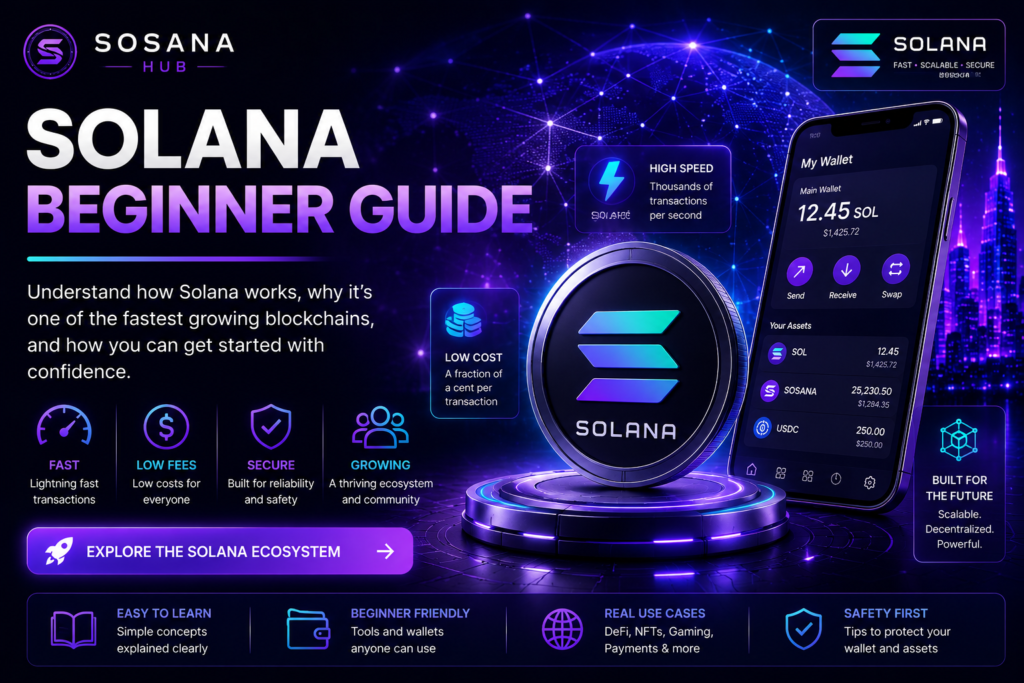
Solana Beginner Guide: Understanding One of Crypto’s Fastest Growing Blockchains
Cryptocurrency can seem complicated when you’re first getting started. Many beginners hear terms like blockchain, wallets, tokens, staking, and decentralized applications without understanding how everything fits together. Solana has become one of the most talked-about blockchain ecosystems because it offers fast transactions, low fees, and a growing community of developers and users. This beginner guide explains what Solana is, how it works, and why millions of people are paying attention to it.
Quick Answer: What Is Solana?
Solana is a blockchain network designed to support digital assets, cryptocurrency transactions and decentralized applications.
Think of Solana as the underlying digital infrastructure. Developers can build applications on it, users can transfer digital assets across it, validators help operate the network, and SOL serves as the network’s native cryptocurrency.
What Is Solana?
Solana is a blockchain network designed to support digital assets, decentralized applications, and cryptocurrency transactions.
Like other blockchains, Solana allows people to send and receive digital assets without relying on traditional banks or financial institutions to maintain the blockchain itself.
What makes Solana particularly notable is its focus on:
Speed
Solana is designed to process blockchain transactions quickly.
Scalability
The network was designed to accommodate significant blockchain activity as usage grows.
Low Transaction Costs
Solana transactions generally involve relatively small network fees.
User Accessibility
Wallets and applications give everyday users access to the broader Solana ecosystem.
Today, Solana supports projects ranging from decentralized finance applications to NFTs, games, tokens and community-driven cryptocurrency projects.
Why Was Solana Created?
As cryptocurrency adoption increased, some blockchain networks experienced periods of congestion and higher transaction fees.
Solana was developed with the goal of creating a blockchain capable of processing large amounts of activity efficiently while keeping transaction costs relatively low.
The Basic Idea
A blockchain needs a way for many computers to agree about what happened on the network.
Solana uses a distributed network of validators that participate in processing transactions and maintaining the blockchain.
The important beginner takeaway is simple: Solana is the network. SOL is its native cryptocurrency. Applications and tokens can then be built and used on that network.
How Does Solana Work?
At its core, Solana processes transactions across a distributed network of computers.
When users send cryptocurrency or interact with blockchain applications, validators participate in processing and securing network activity.
This system provides the foundation for:
- Digital-asset transfers
- Transparent blockchain records
- Decentralized applications
- Token creation and interaction
- Staking and validator participation
What Is SOL?
SOL is the native cryptocurrency of the Solana blockchain. It plays several important roles within the network.
Transaction Fees
Small amounts of SOL are used to pay network fees when transactions occur on Solana.
Staking
SOL holders can delegate SOL to validators as part of Solana’s proof-of-stake system and may receive staking rewards.
Ecosystem Activity
SOL is commonly used when interacting with applications, services and other activities throughout the Solana ecosystem.
What Can You Do on Solana?
Solana is much more than a way to transfer SOL. An entire ecosystem of applications and communities has developed around the network.
Decentralized Finance
DeFi applications can provide services such as token swaps, lending, borrowing and liquidity pools using blockchain technology.
NFTs & Digital Assets
Solana can support digital collectibles, artwork, memberships and other tokenized assets.
Community Tokens
Many community-driven tokens and projects operate within the Solana ecosystem.
Blockchain Gaming
Some games use Solana for digital ownership and other blockchain-based features.
Applications
Developers can build decentralized applications and services that interact with the Solana blockchain.
Educational Communities
Communities such as SOSANA Hub help beginners learn about blockchain, wallet security and responsible crypto research.
Why Are People Interested in Solana?
Fast Transactions
Solana is designed to process transactions quickly, which can make blockchain applications feel more responsive to users.
Low Fees
Network transaction costs are generally relatively low, making smaller transactions more practical.
Growing Ecosystem
Developers continue building wallets, applications, infrastructure and communities around Solana.
Wide Range of Uses
The ecosystem includes payments, DeFi, staking, NFTs, gaming, tokens, research tools and educational resources.
Common Risks Beginners Should Understand
Learning what Solana can do is only half of the picture. Every cryptocurrency ecosystem also involves risks.
Market Volatility
SOL and other cryptocurrencies can experience substantial price increases and declines.
Wallet Security
Users need to protect recovery phrases, private credentials and wallet permissions.
Project Risk
A project being built on Solana does not mean that the project is trustworthy or will succeed.
Scams & Phishing
Fake websites, impersonation, malicious links and fraudulent tokens can target crypto users.
Solana Wallets for Beginners
A cryptocurrency wallet is one of the primary tools used to interact with Solana. Wallets help users manage blockchain accounts, authorize transactions and interact with applications.
Popular Solana-compatible wallets include:
How SOSANA Fits Into the Solana Ecosystem
One example of a community-focused project operating within the broader Solana ecosystem is SOSANA.
SOSANA combines community participation, project discovery, voting opportunities and educational resources within an ecosystem built around Solana.
For beginners interested in community-driven crypto projects, SOSANA can also provide an example to research using the same principles applied to other cryptocurrency projects.
Remember that learning about a project should come before making decisions about participating in it.
Frequently Asked Questions
Is Solana beginner friendly?
Solana offers a large ecosystem of wallets, applications and educational resources. Beginners should still take time to understand wallets, security and blockchain basics before participating.
Do I need a lot of money to start?
No. You can begin by learning about Solana without making any financial commitment at all.
Is Solana safe?
Solana is an established blockchain network, but using cryptocurrency still involves risk. Wallet security, malicious applications, scams, token risk and market volatility remain important considerations.
Can I use Solana on my phone?
Yes. Several Solana-compatible wallets and applications provide mobile options.
Is SOL the same thing as Solana?
Not exactly. Solana is the blockchain network. SOL is the network’s native cryptocurrency.
Ready to Learn More?
Understanding Solana is an important first step toward exploring the broader ecosystem. Continue learning about wallets, security, research and the communities operating on Solana before deciding how—or whether—you want to participate.
🚀 Learn More About SOSANAContinue Your Journey
Next Recommended Guides:
- What Is SOSANA?
- How To Get Started With SOSANA
- Crypto Safety Guide
- SOSANA Community Updates