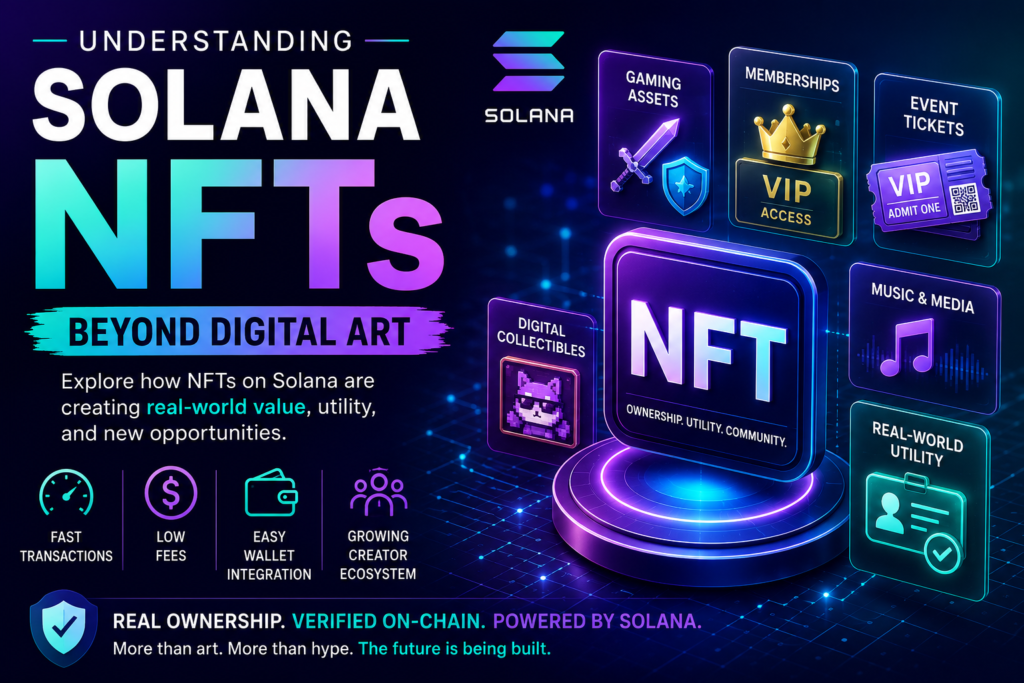
Understanding Solana NFTs: Beyond Digital Art
When many people hear the term NFT, they immediately think of expensive digital artwork selling for thousands—or even millions—of dollars. While digital art helped introduce NFTs to the mainstream, it represents only a small part of what this technology can do. Today, NFTs are being used for much more than collectibles, and their real-world applications continue to expand across industries.
On the Solana blockchain, NFTs are helping creators, businesses, developers, and communities build new ways to prove ownership, access exclusive experiences, and manage digital assets. From gaming and event tickets to memberships and digital identities, NFTs are becoming an important building block of the broader blockchain ecosystem.
This guide explains what Solana NFTs are, how they work, and why they’re increasingly being used for practical purposes beyond digital art. Whether you’re completely new to NFTs or simply curious about how they fit into the Solana ecosystem, this article will help you understand the fundamentals.
What Is an NFT?
NFT stands for Non-Fungible Token.
The word non-fungible simply means unique.
Unlike cryptocurrencies such as SOL or USDC, where one token is generally interchangeable with another of the same type, each NFT has unique information stored on the blockchain that distinguishes it from every other NFT.
Think of it like this:
A $20 bill can usually be exchanged for another $20 bill because they represent the same value.
A signed baseball card, concert ticket, or property deed is different because each one represents something unique.
NFTs bring that concept of uniqueness into the digital world.
They allow ownership of digital items to be verified through blockchain technology.
Why Solana Has Become Popular for NFTs
Several characteristics have helped Solana become one of the leading blockchain networks for NFT projects.
Fast Transactions
Buying, selling, or transferring NFTs typically happens quickly on Solana.
Fast confirmation times improve the user experience for collectors and creators alike.
Low Transaction Costs
Compared to some blockchain networks, Solana generally offers significantly lower transaction fees.
Lower costs make it easier for creators to mint NFTs and for users to interact with NFT marketplaces without paying large network fees.
A Growing Creator Ecosystem
Artists, musicians, developers, gaming companies, and entrepreneurs continue building projects on Solana.
As more creators join the ecosystem, NFT use cases continue expanding beyond artwork.
If you’re still learning how the broader Solana ecosystem fits together, our Solana Ecosystem Explained for Beginners article provides an excellent overview.
NFTs Are More Than Digital Art
One of the biggest misconceptions about NFTs is that they exist only for buying and selling artwork.
In reality, NFTs can represent ownership of many different digital and physical assets.
Some of today’s most promising use cases include:
Event Tickets
NFTs can help reduce ticket fraud by creating verifiable digital tickets stored on a blockchain.
Instead of printing paper tickets, event organizers can issue blockchain-based tickets that are easier to authenticate.
Membership Access
Some communities use NFTs as digital membership cards.
Holding a specific NFT may provide access to:
- Private online communities
- Educational resources
- Special events
- Exclusive content
Because ownership is verified on the blockchain, memberships can often be confirmed automatically.
Gaming Assets
Many blockchain games use NFTs to represent:
- Characters
- Equipment
- Weapons
- Land
- Collectibles
Players may truly own these digital assets rather than simply licensing them from a game publisher.
Digital Collectibles
Collectibles remain one of the most popular NFT categories.
Sports organizations, entertainment brands, and creators have all explored NFTs as a new way to engage with fans.
Unlike traditional collectibles, blockchain technology allows ownership history to be publicly verified.
Loyalty and Rewards
Some businesses are beginning to experiment with NFTs for customer loyalty programs.
Instead of physical membership cards, customers could receive blockchain-based digital assets that unlock rewards or exclusive experiences.
How NFTs Work
NFTs exist on a blockchain, which permanently records ownership information.
When someone creates an NFT, the process is called minting.
Minting records information about the NFT on the blockchain, creating a permanent record of its existence.
After minting, the NFT can be transferred between compatible wallets.
Ownership updates automatically on the blockchain whenever a transfer occurs.
Unlike traditional digital files that can be copied endlessly, blockchain technology allows ownership of the original NFT to be verified publicly.
Where Are NFTs Stored?
Most NFTs are viewed and managed through cryptocurrency wallets.
Popular Solana wallets such as Phantom allow users to:
- View NFT collections
- Send NFTs
- Receive NFTs
- Connect to marketplaces
- Manage digital assets
If you’re new to crypto wallets, our Phantom Wallet Setup Guide for Beginners explains how to safely create and manage your first Solana wallet.
Why Communities Matter
Many successful NFT projects grow because of their communities rather than the artwork itself.
Strong communities often provide:
- Educational resources
- Member discussions
- Events
- Shared experiences
- Ongoing project development
An active community can help sustain interest long after an NFT collection launches.
Our How Community Participation Shapes Crypto Projects article explores why community engagement has become one of the strongest indicators of long-term project growth.
NFTs Continue to Evolve
NFT technology is still relatively young.
Developers continue exploring new applications in areas such as:
- Education
- Healthcare
- Identity verification
- Intellectual property
- Supply chain management
- Real estate
- Certifications
As blockchain technology matures, NFTs are likely to expand far beyond today’s most common use cases.
NFT Security: Protecting Your Digital Assets
Like any digital asset, NFTs require proper security practices. While blockchain technology provides transparent ownership records, users remain responsible for protecting access to their wallets.
Before interacting with any NFT marketplace or minting website:
- Verify you’re visiting the official website.
- Bookmark trusted marketplaces.
- Never share your recovery phrase.
- Review wallet permissions before approving transactions.
- Be cautious of direct messages promoting “exclusive” NFT drops.
Scammers often create fake NFT collections or counterfeit minting websites designed to trick users into connecting their wallets.
Developing strong security habits is one of the best investments you can make.
Our Solana Wallet Security Checklist provides practical guidance for protecting your wallet while exploring NFTs and other blockchain applications.
How to Research an NFT Project
Not every NFT collection offers long-term value or meaningful utility.
Before purchasing or joining any NFT project, take time to evaluate several key areas.
Community
Is the community active, respectful, and educational?
Communities that encourage discussion and provide helpful resources often create stronger long-term engagement.
Purpose
Does the NFT serve a purpose beyond collecting?
Projects with practical utility may offer:
- Membership access
- Gaming integration
- Educational benefits
- Exclusive experiences
- Community participation
Understanding the project’s purpose helps you evaluate whether it aligns with your interests.
Transparency
Look for clear communication.
Reliable projects typically explain:
- Their goals
- Development plans
- Community guidelines
- Official communication channels
Transparency helps build trust.
Long-Term Vision
Some projects focus primarily on short-term excitement.
Others continue developing tools, partnerships, educational resources, or community programs long after launch.
Understanding the project’s long-term direction can help you make more informed decisions.
Our Why Research Matters More Than Hype in Crypto article explains why taking time to evaluate projects often leads to better decisions than following market excitement.
Common Misconceptions About NFTs
Because NFTs gained widespread attention through digital artwork, several misconceptions still exist.
“NFTs Are Only Pictures”
False.
NFTs can represent many different types of digital ownership, including tickets, memberships, gaming assets, certifications, and more.
“Anyone Can Copy an NFT”
People can copy an image associated with an NFT, but they cannot duplicate the blockchain record that verifies ownership of the original asset.
The blockchain acts as a public ledger showing who owns the authentic token.
“NFTs Have No Practical Use”
While some collections focus on art, many NFTs now provide access to communities, events, digital services, and other utilities.
As blockchain technology evolves, practical use cases continue expanding.
NFTs and the Future of Digital Ownership
Many experts believe NFTs represent more than a temporary trend.
The underlying concept of verifiable digital ownership has potential applications across many industries.
Possible future uses include:
- Academic certificates
- Professional licenses
- Medical records (with appropriate privacy protections)
- Event credentials
- Real estate documentation
- Brand loyalty programs
- Intellectual property management
While adoption is still developing, NFTs demonstrate how blockchain technology can securely verify ownership of digital assets.
Continue Learning With Official Resources
If you’d like to explore projects building within the Solana ecosystem, the official Solana Ecosystem directory provides an overview of wallets, NFT marketplaces, developer tools, payment platforms, decentralized finance applications, and other blockchain projects.
Final Thoughts
NFTs have come a long way since they first gained popularity through digital artwork.
Today, they represent a flexible technology capable of supporting ownership, access, identity, gaming, education, entertainment, and many other real-world applications.
As with every area of cryptocurrency, the best approach is to remain curious while continuing to learn.
Research projects carefully.
Protect your wallet.
Ask questions.
Participate responsibly.
By focusing on education rather than hype, you’ll be better prepared to understand how NFTs fit into the broader Solana ecosystem as blockchain technology continues evolving.
Frequently Asked Questions
What does NFT stand for?
NFT stands for Non-Fungible Token, meaning a unique digital asset recorded on a blockchain.
Are NFTs only used for digital art?
No.
NFTs can also represent memberships, event tickets, gaming assets, certifications, loyalty rewards, digital identities, and many other types of digital ownership.
Do I need a wallet to own NFTs?
Yes.
A compatible cryptocurrency wallet is typically required to receive, store, and manage NFTs.
Can NFTs be copied?
The associated image or file may be copied, but ownership of the original NFT is verified on the blockchain and cannot simply be duplicated.
Are NFTs risky?
Like all blockchain assets, NFTs involve risks.
Always research projects, verify official websites, and protect your wallet before participating.
Continue Learning
➡️ Solana Ecosystem Explained for Beginners
➡️ Phantom Wallet Setup Guide for Beginners
➡️ Solana Wallet Security Checklist
➡️ Why Research Matters More Than Hype in Crypto
➡️ How Community Participation Shapes Crypto Projects
Ready To Learn More?
Continue exploring the Solana ecosystem and discover how communities, developers, and education are helping shape the future of blockchain technology.
About the Author
Scott Jones is the founder of SOSANA Hub and a cryptocurrency enthusiast dedicated to helping beginners confidently navigate the Solana ecosystem.
After learning cryptocurrency through years of trial and error—including encounters with scams, fake websites, and costly mistakes—Scott created SOSANA Hub to share educational resources that help others avoid common pitfalls and make more informed decisions.
Learn more about Scott’s crypto journey.
Affiliate Disclosure
SOSANA Hub participates in affiliate programs and may earn a commission when readers purchase products or sign up through qualifying referral links. These commissions help support the educational content published on this website at no additional cost to you.
The information provided on SOSANA Hub is for educational purposes only and should not be considered financial, legal, tax, or investment advice. Always conduct your own independent research and consult a qualified financial professional before making financial decisions.