Solana Ecosystem Explained for Beginners
If you’re new to cryptocurrency, you’ve probably heard people talk about the “Solana ecosystem.” At first, the term can sound confusing. Is it a blockchain? A collection of apps? A community? The answer is that it’s all of these things working together.
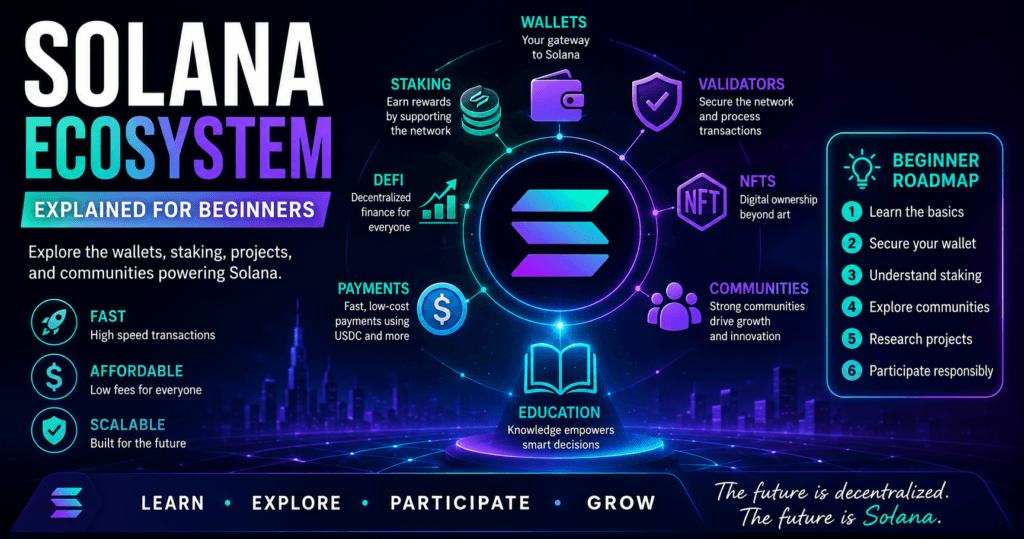
The Solana ecosystem is much more than the Solana blockchain itself. It includes wallets, decentralized applications (dApps), staking, validators, developers, NFT projects, decentralized finance (DeFi), payment solutions, educational communities, and thousands of people building and using new technologies every day. Understanding how these pieces connect will help you navigate the crypto world with greater confidence.
Rather than thinking of Solana as a single cryptocurrency, imagine it as a digital city. The blockchain is the foundation, but the ecosystem is everything built on top of it. Businesses, developers, educators, creators, investors, and communities all contribute to making the ecosystem stronger.
What Is the Solana Ecosystem?
The Solana ecosystem is the complete network of applications, services, infrastructure, and communities built on the Solana blockchain.
Instead of existing as one company or organization, the ecosystem consists of thousands of independent participants working together.
These include:
- Wallet providers
- Validators
- Developers
- Decentralized applications (dApps)
- NFT marketplaces
- DeFi platforms
- Payment solutions
- Educational communities
- Content creators
Each group plays a different role, but together they help make Solana one of the most active blockchain ecosystems in the cryptocurrency industry.
If you’re just getting started with blockchain technology, our Solana Beginner Guide is the perfect first step before exploring the larger ecosystem.
The Solana Blockchain Is the Foundation
Everything within the ecosystem begins with the Solana blockchain.
The blockchain acts as the shared ledger that records transactions securely and transparently. Every wallet transaction, NFT purchase, staking reward, or decentralized application interaction is ultimately recorded on the blockchain.
Solana is designed to support:
- Fast transaction speeds
- Low transaction costs
- High scalability
- Secure network validation
These characteristics have made it attractive to developers building new blockchain applications.
Wallets: Your Gateway Into the Ecosystem
Before you can participate in the Solana ecosystem, you’ll need a wallet.
A wallet allows you to:
- Store SOL
- Send and receive tokens
- Connect to decentralized applications
- Stake SOL
- Manage NFTs
- Approve blockchain transactions
Some of the most popular Solana wallets include:
- Phantom
- Solflare
- Backpack
Each wallet offers slightly different features, but they all serve as your personal gateway into the ecosystem.
If you’re setting up your first wallet, our Phantom Wallet Setup Guide for Beginners walks through the process step by step.
Staking Helps Secure the Network
One of the unique features of Solana is staking.
Instead of simply holding SOL, many users choose to stake their tokens to help support the network.
Staking allows token holders to delegate their SOL to validators, which help process transactions and maintain the blockchain.
Benefits of staking include:
- Supporting network security
- Participating in blockchain operations
- Potentially earning staking rewards
If staking is new to you, read our What Is Solana Staking? A Beginner’s Guide for a complete overview.
Validators Keep the Ecosystem Running
Validators are one of the most important components of the Solana ecosystem.
They verify transactions, produce new blocks, and help maintain the integrity of the blockchain.
Without validators, the network could not function.
Choosing a reliable validator is also an important decision for anyone interested in staking.
Our Understanding Solana Validators and Staking Rewards guide explains how validators operate and what beginners should consider when selecting one.
Decentralized Applications (dApps)
One reason the Solana ecosystem continues to grow is the large number of decentralized applications being built on the network.
Unlike traditional mobile apps that rely on centralized servers, decentralized applications interact directly with blockchain technology.
Examples include:
- Trading platforms
- NFT marketplaces
- Gaming applications
- Financial tools
- Social platforms
- Creator tools
New dApps are being developed regularly, expanding the functionality of the Solana ecosystem.
Meme Coins and Community Projects
Many newcomers discover Solana through meme coins.
While meme coins often begin with humor or internet culture, successful projects usually grow because of strong communities, education, and long-term engagement.
It’s important to remember that not all meme coin projects are the same. Some focus primarily on speculation, while others build educational resources, tools, or active communities.
Our Beginner’s Guide to Solana Meme Coins explains how these projects work and what beginners should research before participating.
Research Should Always Come Before Participation
The Solana ecosystem offers thousands of opportunities, but that doesn’t mean every project deserves your attention.
Responsible participation starts with education.
Before connecting your wallet, purchasing a token, or joining a community, take time to research the project thoroughly.
Our Why Research Matters More Than Hype in Crypto article explains why informed decision-making is one of the most valuable skills you can develop as a crypto participant.
Decentralized Finance (DeFi)
One of the fastest-growing areas within the Solana ecosystem is Decentralized Finance, commonly called DeFi.
DeFi refers to financial applications that operate on blockchain technology instead of relying on traditional banks or financial institutions.
Within the Solana ecosystem, DeFi platforms allow users to:
- Swap tokens
- Provide liquidity
- Borrow and lend digital assets
- Earn rewards
- Participate in decentralized financial services
While DeFi opens exciting possibilities, beginners should understand how each platform works before participating. Every protocol carries its own risks, so research is always essential.
NFTs Are More Than Digital Art
Many people associate NFTs with digital artwork, but NFTs have evolved far beyond collectibles.
Within the Solana ecosystem, NFTs can represent:
- Digital artwork
- Event tickets
- Gaming assets
- Membership access
- Digital identities
- Collectibles
- Creator communities
As blockchain technology evolves, NFTs continue finding new practical applications beyond buying and selling artwork.
Payments and Stablecoins
Another important part of the Solana ecosystem is digital payments.
Many users transfer value using stablecoins such as USDC, which are designed to maintain a relatively stable value compared to traditional currencies.
Because Solana transactions are generally fast and inexpensive, the network has become attractive for:
- Peer-to-peer payments
- Business transactions
- International transfers
- Merchant payments
These payment capabilities continue expanding as more businesses and developers adopt blockchain technology.
Security Is Everyone’s Responsibility
No matter which part of the Solana ecosystem you explore, security should always remain one of your highest priorities.
Before interacting with any application:
- Verify the website address.
- Protect your recovery phrase.
- Avoid clicking unknown links.
- Review wallet permissions carefully.
- Confirm information using official sources.
Taking a few extra minutes to verify information can prevent costly mistakes.
Our Solana Wallet Security Checklist provides practical steps every beginner should follow before connecting a wallet to any blockchain application.
Communities Help the Ecosystem Grow
Technology alone doesn’t create a successful blockchain ecosystem.
Communities play an equally important role.
Developers build applications.
Validators secure the network.
Educators create learning resources.
Content creators explain complex topics.
Community members welcome newcomers and share knowledge.
This collaboration is one reason Solana has become one of the most active blockchain ecosystems in the industry.
Our How Community Participation Shapes Crypto Projects article explains why engaged communities often become one of a project’s greatest strengths.
The SOSANA Community
One example of a community-first approach within the Solana ecosystem is SOSANA.
Rather than focusing exclusively on market activity, the community encourages members to:
- Learn continuously
- Research projects carefully
- Ask thoughtful questions
- Share knowledge
- Participate responsibly
This philosophy aligns with the idea that long-term education creates stronger participants than short-term hype.
If you’re new to the project, our What Makes SOSANA Different? article introduces the community’s educational mission and values.
A Beginner’s Roadmap to Exploring Solana
If you’re just beginning your journey, you don’t need to learn everything at once.
Instead, follow a simple progression:
Step 1: Learn the Basics
Understand how blockchain technology and Solana work.
Step 2: Create a Wallet
Choose a trusted wallet and learn how to secure it.
Step 3: Understand Staking
Learn how validators and staking help secure the network.
Step 4: Explore Communities
Join communities that encourage education and respectful discussion.
Step 5: Research Projects
Take time to understand a project’s purpose, community, and risks before participating.
Step 6: Continue Learning
Blockchain technology evolves quickly. Continue reading, asking questions, and expanding your knowledge over time.
Learn From Official Resources
One of the best ways to understand the Solana ecosystem is by exploring official educational resources.
The Solana Ecosystem page provides an overview of applications, wallets, infrastructure, developer tools, and other projects that make up the broader network.
Frequently Asked Questions
What is the Solana ecosystem?
The Solana ecosystem includes the blockchain itself along with wallets, validators, decentralized applications, developers, NFT projects, DeFi platforms, payment solutions, and communities that build and use the network.
Do I need SOL to use the ecosystem?
Yes. SOL is generally required to pay network transaction fees and participate in activities such as staking.
Is Solana beginner-friendly?
Many newcomers find Solana approachable because of its relatively low transaction costs, fast confirmation times, and wide range of educational resources.
What should I learn first?
Start with blockchain fundamentals, wallet security, and staking before exploring more advanced topics like DeFi or NFTs.
Is the Solana ecosystem still growing?
Yes. Developers continue building new applications, communities continue expanding, and the ecosystem regularly introduces new tools and services.
Continue Learning
➡️ Understanding Solana Validators and Staking Rewards
➡️ Beginner’s Guide to Solana Meme Coins
➡️ Why Research Matters More Than Hype in Crypto
➡️ How Community Participation Shapes Crypto Projects
Ready To Learn More?
Continue exploring the Solana ecosystem and discover how communities, developers, and education are helping shape the future of blockchain technology.
About the Author
Scott Jones is the founder of SOSANA Hub and a cryptocurrency enthusiast dedicated to helping beginners navigate the Solana ecosystem with confidence. After learning cryptocurrency through years of trial and error—including encounters with scams, fake websites, and costly mistakes—Scott created SOSANA Hub to share practical educational resources that help others make informed decisions.
Learn more about Scott’s journey and mission.
Affiliate Disclosure
SOSANA Hub participates in affiliate programs and may earn a commission when readers purchase products or sign up through qualifying referral links. These commissions help support the educational content on this website at no additional cost to you.
The information provided on SOSANA Hub is for educational purposes only and should not be considered financial, legal, tax, or investment advice. Always conduct your own research and consult a qualified financial professional before making investment decisions.